
Disclosure: Some links on this page are affiliate links. If you sign up through them, The Wealth Repo may earn a commission at no extra cost to you. This is general education, not personalized financial advice.
Portfolio rebalancing forces you to sell high and buy low without trying to time anything. Here's how often to do it, what it actually costs, and why skipping it for years can wreck your risk level.
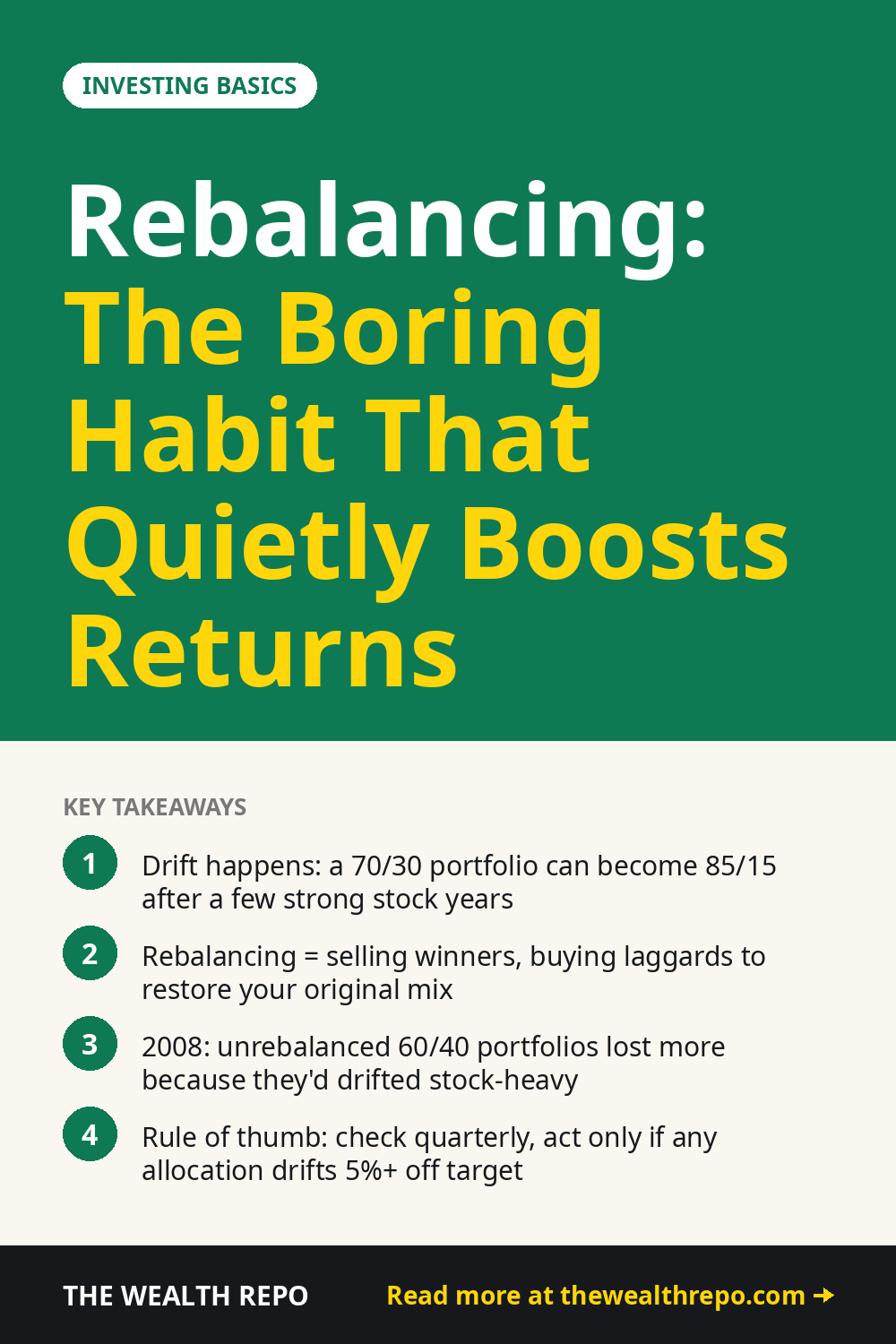
Say you start with a simple 70/30 stock-bond split and stocks have a great five years. Without touching anything, that 70/30 can drift to 85/15, and you've accidentally turned a moderate portfolio into an aggressive one. Rebalancing means selling a slice of the winner and buying more of the laggard to get back to your original targets. It feels wrong in the moment — you're trimming the thing that's working — which is exactly why most people skip it.
The math behind it is less about boosting returns and more about controlling risk, though it can do both. A Vanguard study tracking 60/40 portfolios from 1926 to 2019 found annually rebalanced portfolios had similar returns to never-rebalanced ones, but with noticeably lower volatility — the never-rebalanced version drifted to over 80% stocks by the end and took much bigger hits in downturns. In 2008, an unrebalanced 60/40 portfolio that had drifted stock-heavy lost significantly more than one kept in check, precisely when people could least afford it.
💡 The hardest part is opening the account. Robinhood lets you buy stocks and ETFs commission-free, with no account minimum. Open a Robinhood account →
You don't need to do this monthly. Checking quarterly and rebalancing only when an allocation drifts more than 5 percentage points from target is the standard approach, and it keeps trading costs and tax events down. In a taxable account, favor rebalancing with new contributions first — direct fresh cash into whatever's underweight instead of selling winners and triggering capital gains. Inside a 401(k) or IRA, sell and buy freely since there's no tax hit, and some providers let you set automatic rebalancing on a schedule so you never have to remember.
The common mistake is treating rebalancing as a market-timing tool — selling stocks because you think a crash is coming, then calling it rebalancing after the fact. That's not the same thing and it usually backfires. Real rebalancing is mechanical: you pick target percentages in advance, check them on a calendar, and adjust by rule, not by gut feeling about where the market is headed next.
Key Takeaways
- ✅ Drift happens: a 70/30 portfolio can become 85/15 after a few strong stock years
- ✅ Rebalancing = selling winners, buying laggards to restore your original mix
- ✅ 2008: unrebalanced 60/40 portfolios lost more because they'd drifted stock-heavy
- ✅ Rule of thumb: check quarterly, act only if any allocation drifts 5%+ off target
- ✅ Taxable account? Rebalance with new deposits first to dodge capital gains tax
- ✅ 401(k)/IRA? No tax hit — set auto-rebalancing and forget it