
Dividend income math comes down to one formula: target income divided by yield equals the principal you need. This breaks down real numbers using dividend index funds like SCHD and explains why chasing the highest yield can quietly cost you money.
Dividend yield is just a fraction: annual dividends per share divided by the current share price. A fund like Schwab US Dividend Equity ETF (SCHD) pays out around 3.5% a year, split into four quarterly deposits instead of one lump sum from a single stock. That matters because the fund holds roughly 100 companies, so each quarterly payment is really dozens of smaller dividends blended into one deposit in your account.
To figure out how much principal you need, flip the yield formula around: target income divided by yield equals required investment. Want $20,000 a year in dividend income? At a 3.5% yield, that's $571,000 invested. At a more conservative 2.5% yield, typical of a fund weighted toward dividend growth over current payout, you'd need $800,000. The gap between those two numbers is the real tradeoff: a higher current yield usually means less price appreciation down the road, and the reverse holds too.
The mistake people make is shopping by yield number alone. A fund yielding 9% isn't paying you more because it found a better deal; it's often yielding that much because its share price dropped, or because it's structured to pay out option premiums and return of capital that erode the fund's value over time. SCHD at 3.5% and a covered-call income fund at 9% are not interchangeable products, so check the fund's five-year total return and NAV trend before assuming the bigger percentage is the better income source.
Individual dividend stocks carry single-company risk that index funds are built to avoid. General Electric cut its dividend by more than 90% between 2017 and 2018, and anyone relying on that one stock for income took a direct hit; a diversified dividend fund absorbs a cut from one or two holdings without wrecking the whole payout. Before buying, check the expense ratio - broad dividend index funds typically run 0.06% to 0.35% a year - and decide whether to take the dividends as cash now or reinvest them automatically while you're still building the pile.
Key Takeaways
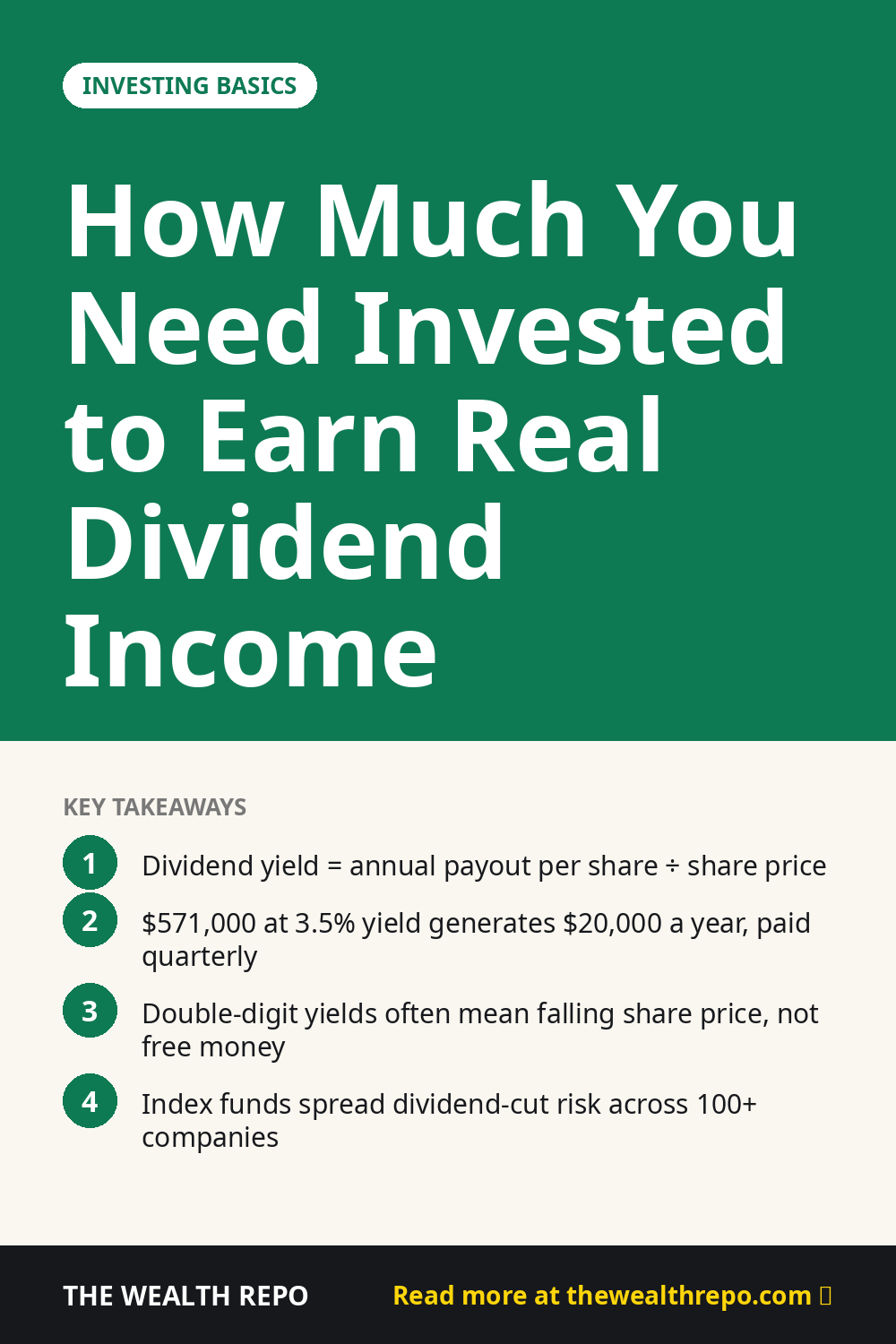
- ✅ Dividend yield = annual payout per share ÷ share price
- ✅ $571,000 at 3.5% yield generates $20,000 a year, paid quarterly
- ✅ Double-digit yields often mean falling share price, not free money
- ✅ Index funds spread dividend-cut risk across 100+ companies
- ✅ GE cut its dividend over 90% in 2017-2018 - single stocks can do that
- ✅ Reinvest dividends while building; take cash once you need the income

