
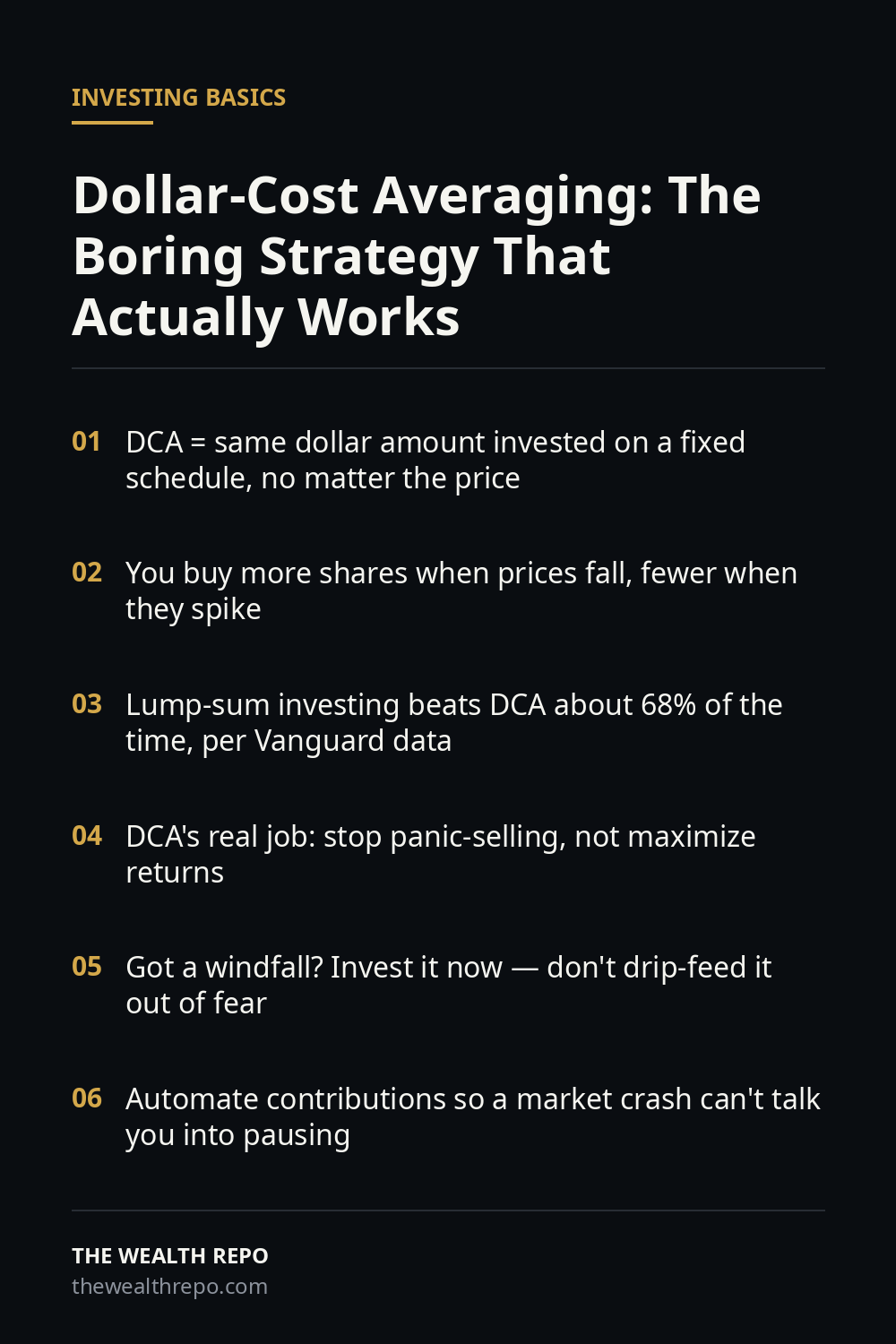
Dollar-cost averaging won't beat lump-sum investing on paper, but it keeps you from making the one mistake that wrecks most portfolios: panic-selling at the bottom. Here's the math on when it helps and when it's just an excuse to stall.
Dollar-cost averaging means putting the same dollar amount into an investment on a fixed schedule, regardless of what the price is doing that day. Put $500 into an S&P 500 index fund every month and you automatically buy more shares when prices dip and fewer when they're expensive. Over time that smooths out your average purchase price instead of leaving you stuck with whatever the market happened to charge on one specific day.
Here's the part most articles skip: Vanguard research on this found that lump-sum investing beats dollar-cost averaging roughly two-thirds of the time, because markets trend upward more often than not, so money sitting in cash waiting to be drip-fed in is usually losing ground. If you inherit $30,000 tomorrow, the math says invest it immediately rather than spreading it over 12 months. Dollar-cost averaging isn't a return-maximizing strategy — it's a behavior-management tool for money you don't have as a lump sum in the first place, like a paycheck.
That's the real use case: you get paid every two weeks, so you're dollar-cost averaging whether you call it that or not. The mistake is treating a one-time windfall like a paycheck and parceling it out of fear, which just costs you time in the market for no real safety benefit. Save the DCA label for recurring contributions — 401(k) deductions, automatic transfers into a brokerage account — where there's no lump sum decision to make anyway.
The more expensive mistake is pausing automatic contributions when the market drops, which is exactly when dollar-cost averaging is doing its best work. During the March 2020 crash, investors who kept contributing bought shares at a 30% discount and rode the recovery; people who paused until things felt 'safe' again bought back in after prices had already climbed. Set your contributions to auto-pilot through your bank or brokerage so a bad week in the market never becomes a decision you have to make with your gut.
Key Takeaways
- ✅ DCA = same dollar amount invested on a fixed schedule, no matter the price
- ✅ You buy more shares when prices fall, fewer when they spike
- ✅ Lump-sum investing beats DCA about 68% of the time, per Vanguard data
- ✅ DCA's real job: stop panic-selling, not maximize returns
- ✅ Got a windfall? Invest it now — don't drip-feed it out of fear
- ✅ Automate contributions so a market crash can't talk you into pausing

