
The Roth vs traditional decision comes down to one question: will your tax rate be higher now or in retirement? Here's the math, the exceptions, and the mistake most people make with their 401(k).
The entire Roth vs traditional debate boils down to a bet on your future tax rate. Traditional accounts give you a deduction today and tax the withdrawals later; Roth accounts tax you today and let withdrawals grow completely untouched. If you're in the 12% bracket now and expect to be in the 22% or higher bracket by retirement, paying the lower tax rate today with a Roth is the better deal. If you're at your peak earning years in the 32%+ bracket, the traditional deduction is worth more right now than the tax-free withdrawal later.
Here's where people get it wrong: they assume their tax rate will drop in retirement just because their income feels lower without a paycheck. That's not always true. Required minimum distributions, Social Security, pension income, and decades of compound growth can push retirees into brackets they didn't expect. A 25-year-old putting $7,000 a year into a Roth IRA at a 10% average return ends up with over $1.1 million by 60 — and every dollar of that growth comes out tax-free, even if tax rates rise across the board by then.
The most overlooked move is splitting contributions between both account types instead of going all-in on one. If your employer offers a Roth 401(k) option alongside traditional, diversifying your tax treatment means you can control your taxable income in retirement by choosing which bucket to pull from each year. Someone with $500,000 in traditional and $500,000 in Roth can withdraw just enough from traditional to stay in a low bracket, then pull extra cash from Roth tax-free without it counting as income at all — useful for keeping Medicare premiums and Social Security taxation down.
One exception worth naming directly: if you're self-employed or expect a big income spike this year — a bonus, a business sale, a high-earning spouse starting a job — max out traditional contributions now to capture the deduction while your rate is high, then switch to Roth in leaner years. The IRS lets you adjust this annually, so there's no reason to lock into one strategy for 30 years straight.
Key Takeaways
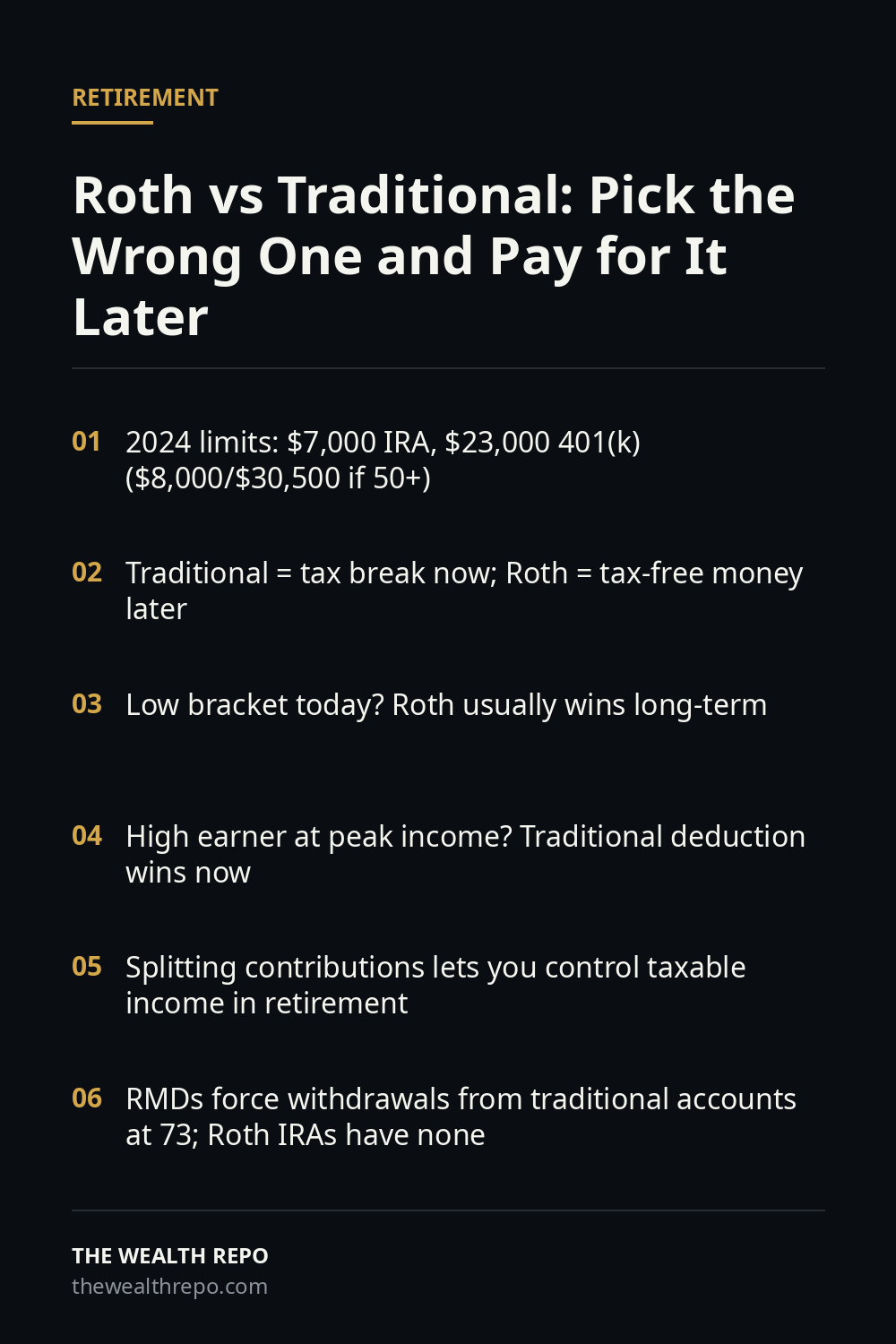
- ✅ 2024 limits: $7,000 IRA, $23,000 401(k) ($8,000/$30,500 if 50+)
- ✅ Traditional = tax break now; Roth = tax-free money later
- ✅ Low bracket today? Roth usually wins long-term
- ✅ High earner at peak income? Traditional deduction wins now
- ✅ Splitting contributions lets you control taxable income in retirement
- ✅ RMDs force withdrawals from traditional accounts at 73; Roth IRAs have none

