
The '3 to 6 months of income' rule is lazy advice that overestimates what you actually need. Calculate your fund based on fixed survival costs and job stability, and the real target is usually smaller and far more achievable.
Most advice tells you to save 3 to 6 months of income, which is a problem because it's calculated against your full paycheck, not what you'd actually spend during a crisis. If you bring home $5,000 a month but your rent, utilities, insurance, minimum debt payments, and groceries only add up to $2,800, your real monthly survival number is $2,800. A 3-month fund at that rate is $8,400, not $15,000 — a far more achievable target that people quit on less often because it doesn't feel impossible from day one.
The right multiplier depends on how volatile your income actually is, not a flat rule everyone follows. Two stable incomes in one household (two salaried jobs, low layoff risk) can get by on 3 months of fixed costs. A single income earner, or anyone with irregular pay like commission, freelance, or gig work, needs 6 to 9 months because the gap between paychecks can stretch longer than expected. Someone with a mortgage, kids, and one earner should lean toward the higher end — the cost of running out of cash mid-crisis is a missed mortgage payment, not a skipped vacation.
The common mistake is building the fund around current lifestyle spending instead of bare-bones survival spending. People include streaming subscriptions, dining out, and gym memberships in their calculation, which inflates the target by hundreds or thousands of dollars and stalls the whole project before it starts. Strip the number down to what keeps the lights on and the family fed, and build toward that first — you can always pad it later once the floor is secure.
Put the money in a high-yield savings account, not a checking account where it blends into everyday spending and gets spent on things that aren't emergencies. Automate a fixed transfer every payday — even $150 every two weeks gets a single-income household to a $5,000 target in under four years, faster if you redirect tax refunds or bonuses. Keep it separate, keep it boring, and resist the urge to invest it for better returns; the whole point is that it's available the day you need it, not three days after a market dip.
Key Takeaways
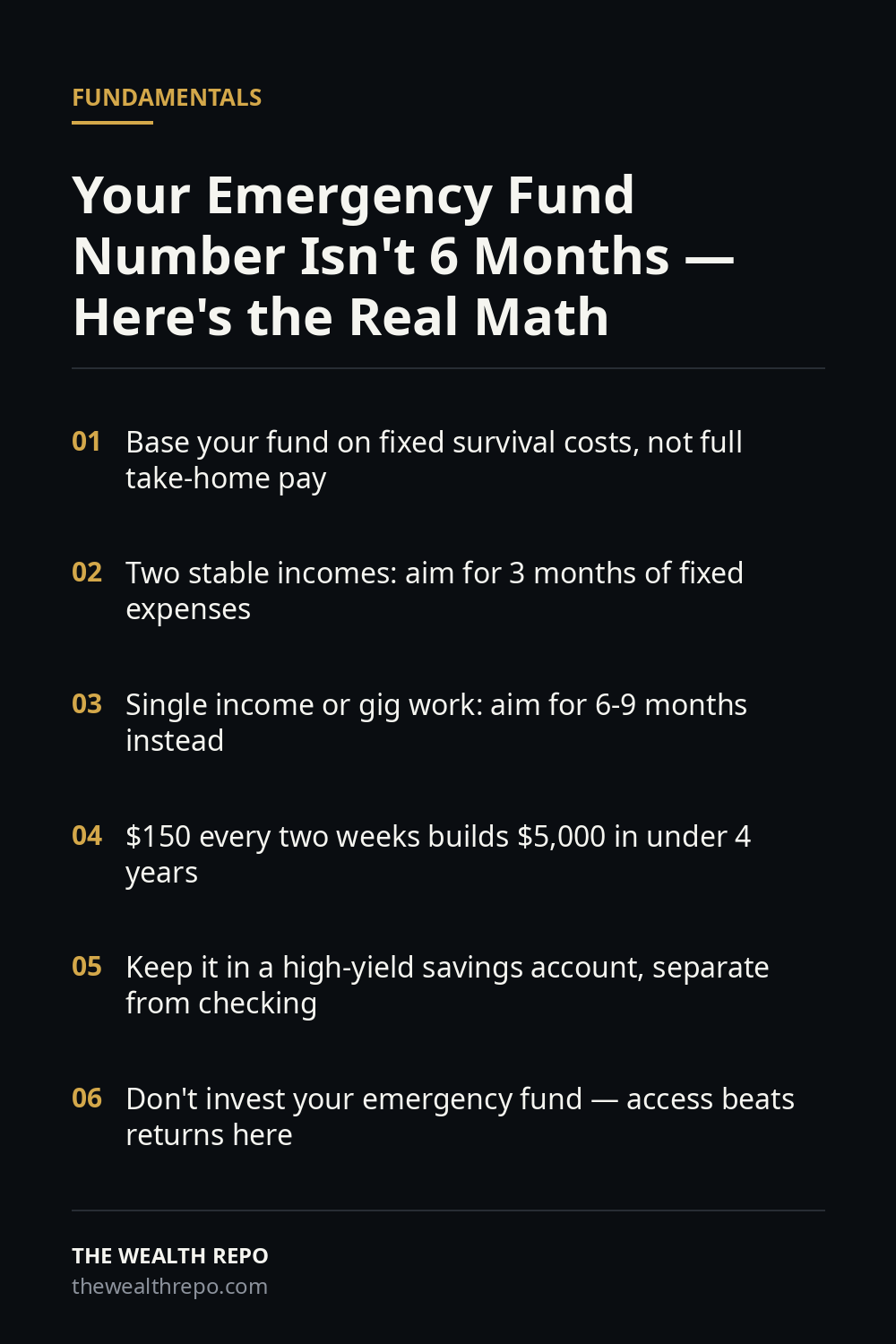
- ✅ Base your fund on fixed survival costs, not full take-home pay
- ✅ Two stable incomes: aim for 3 months of fixed expenses
- ✅ Single income or gig work: aim for 6-9 months instead
- ✅ $150 every two weeks builds $5,000 in under 4 years
- ✅ Keep it in a high-yield savings account, separate from checking
- ✅ Don't invest your emergency fund — access beats returns here

