
Disclosure: Some links on this page are affiliate links. If you sign up through them, The Wealth Repo may earn a commission at no extra cost to you. This is general education, not personalized financial advice.
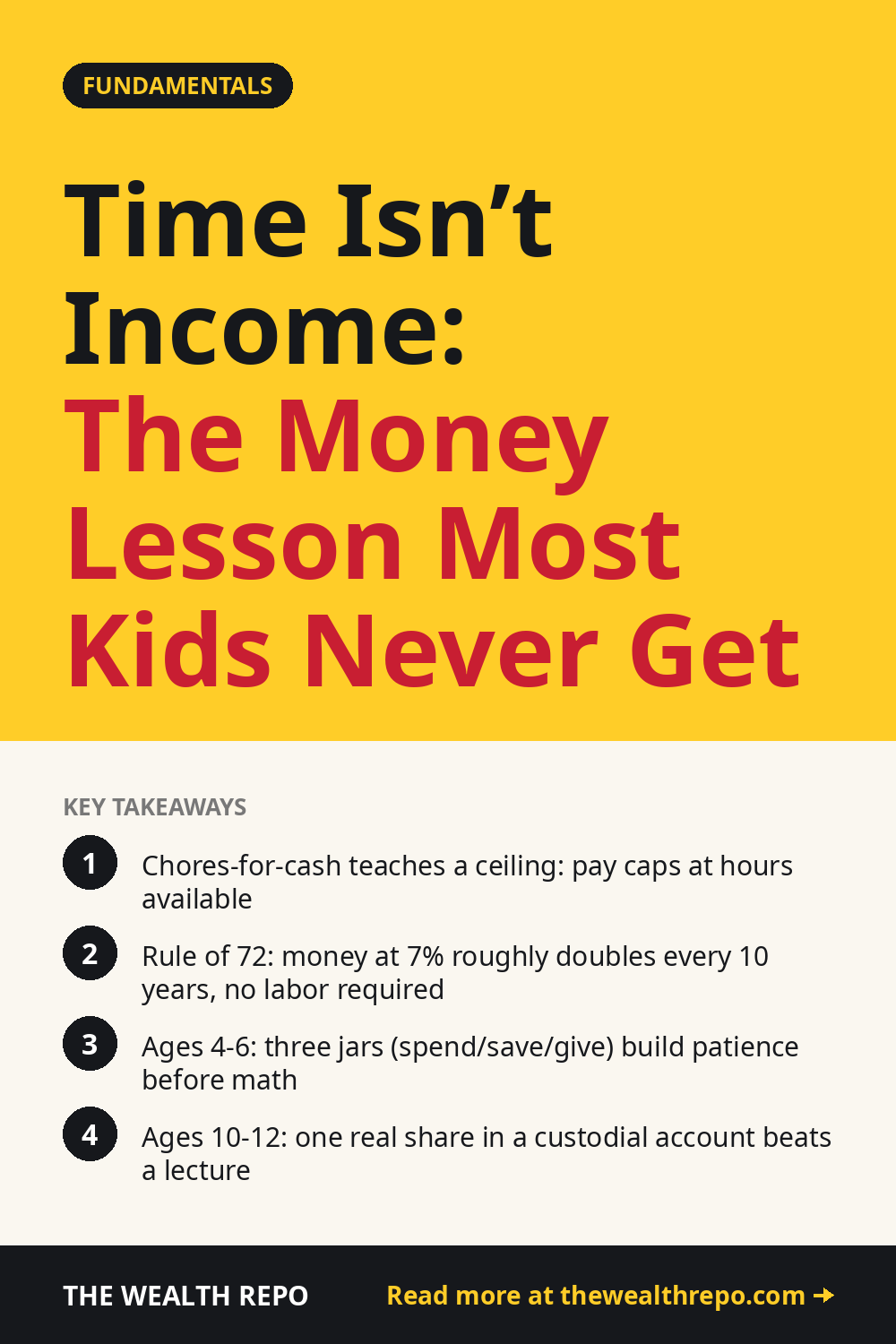
Chores-for-cash teaches kids that money only comes from hours worked, which caps their thinking for life. Here's the age-by-age plan to teach them money can also come from ownership, interest, and risk.
Most kids learn exactly one model of money: do a task, get paid. Empty the dishwasher, earn two dollars. It's a fine starting point, but it quietly teaches a ceiling — you can only earn as much as you have hours and chores available, which is the same trap that keeps adults stuck trading 40 years of hours for a paycheck. The real skill is teaching them that money has a second source: things you own that pay you whether or not you show up.
Here's the mechanism worth explaining with real numbers. If a 10-year-old puts $100 into something earning 7% a year, the Rule of 72 says it roughly doubles every ten years — so by college it's around $200, by their 40s it's $800, with zero additional chores. That's not a trick, it's compounding, and the only ingredient a kid needs to understand it is time, which they have more of than any adult. Showing them an actual brokerage statement with a 'dividend paid' line is worth more than any lecture about 'making your money work for you.'
💡 The money you free up does the most good once it's working for you. Robinhood lets you buy stocks and ETFs commission-free, with no account minimum. Open a Robinhood account →
The age ladder matters because the lesson has to match what a kid can actually grasp. Ages 4-6: three jars (spend, save, give) and the idea that waiting gets you more — a marshmallow-test lesson, not a math one. Ages 7-9: allowance still tied to some chores, but add a second income idea, like a savings account with visible interest, even if it's $0.40 a year. Ages 10-12: open a custodial account and buy one share of something they recognize — a toy company, a game maker — so dividends and price moves become real, not theoretical. Ages 13-16: a part-time or gig job to feel what hourly income actually feels like, paired with automating 20% of it straight into that investment account before they ever touch it. Ages 17-18: a Roth IRA with earned income, so the first dollars they ever shelter from tax are the ones compounding for sixty years.
The common mistake parents make is picking one extreme — either an allowance with no strings that teaches money appears from nowhere, or every single dollar tied to a chore that reinforces hours-for-cash as the only model. The fix is splitting every dollar a kid receives into three jobs on arrival: spend now, save for something specific, and invest for later with no spending allowed until adulthood. A kid who's watched $20 become $38 over eight years understands something most adults figure out in their 30s, if at all.
Key Takeaways
- ✅ Chores-for-cash teaches a ceiling: pay caps at hours available
- ✅ Rule of 72: money at 7% roughly doubles every 10 years, no labor required
- ✅ Ages 4-6: three jars (spend/save/give) build patience before math
- ✅ Ages 10-12: one real share in a custodial account beats a lecture
- ✅ Ages 13-16: automate 20% of job pay into investing before it's spent
- ✅ Ages 17-18: first Roth IRA dollars compound for six decades

