Disclosure: Some links on this page are affiliate links. If you sign up through them, The Wealth Repo may earn a commission at no extra cost to you. This is general education, not personalized financial advice.
The cash envelope method forces you to stop spending when the money's gone, no exceptions. Here's how to set it up, which categories actually work, and the one mistake that sinks most people in month one.
Cash envelope budgeting works because it removes the thing that makes overspending easy: a card that never physically runs out. You withdraw your month's grocery money, say $500, put it in an envelope labeled 'Groceries,' and once that envelope is empty, you stop buying groceries or you find money somewhere else to move over. There's no swipe-and-hope-it-clears moment, because cash either exists in your hand or it doesn't.
The method only works on variable spending categories, not fixed bills. Rent, utilities, and loan payments should stay on autopay since they're the same amount every month and missing a payment hurts your credit. Where envelopes actually change behavior is in categories where you have daily discretion: groceries, dining out, entertainment, clothing, and personal spending money. Those are the categories where a $4 coffee here and a $12 lunch there quietly add up to $300 you never meant to spend.
💡 Once the budget leaves room to save, give that money a job. Robinhood lets you buy stocks and ETFs commission-free, with no account minimum. Open a Robinhood account →
A common mistake is making too many envelopes. People start with fifteen categories, including things like 'pet grooming' and 'birthday gifts,' and the system collapses in week two because managing fifteen stacks of cash is its own chore. Start with three or four envelopes covering your biggest leak categories, track them for two months, then add more only if you're still overspending somewhere specific. Most people find that groceries, gas, and dining out alone account for the bulk of their budget leakage.
The real objection people raise is that cash is inconvenient in a world of tap-to-pay and online ordering. That's fair, which is why apps like Goodbudget and Qube Money replicate the envelope system digitally with a debit card tied to virtual envelope balances, so you get the spending cap without carrying bills. But the original paper version still beats apps for one reason: physically handing over cash triggers more loss aversion in your brain than tapping a card, which is exactly why it curbs spending better for people who've tried budgeting apps and still overspent.
Key Takeaways
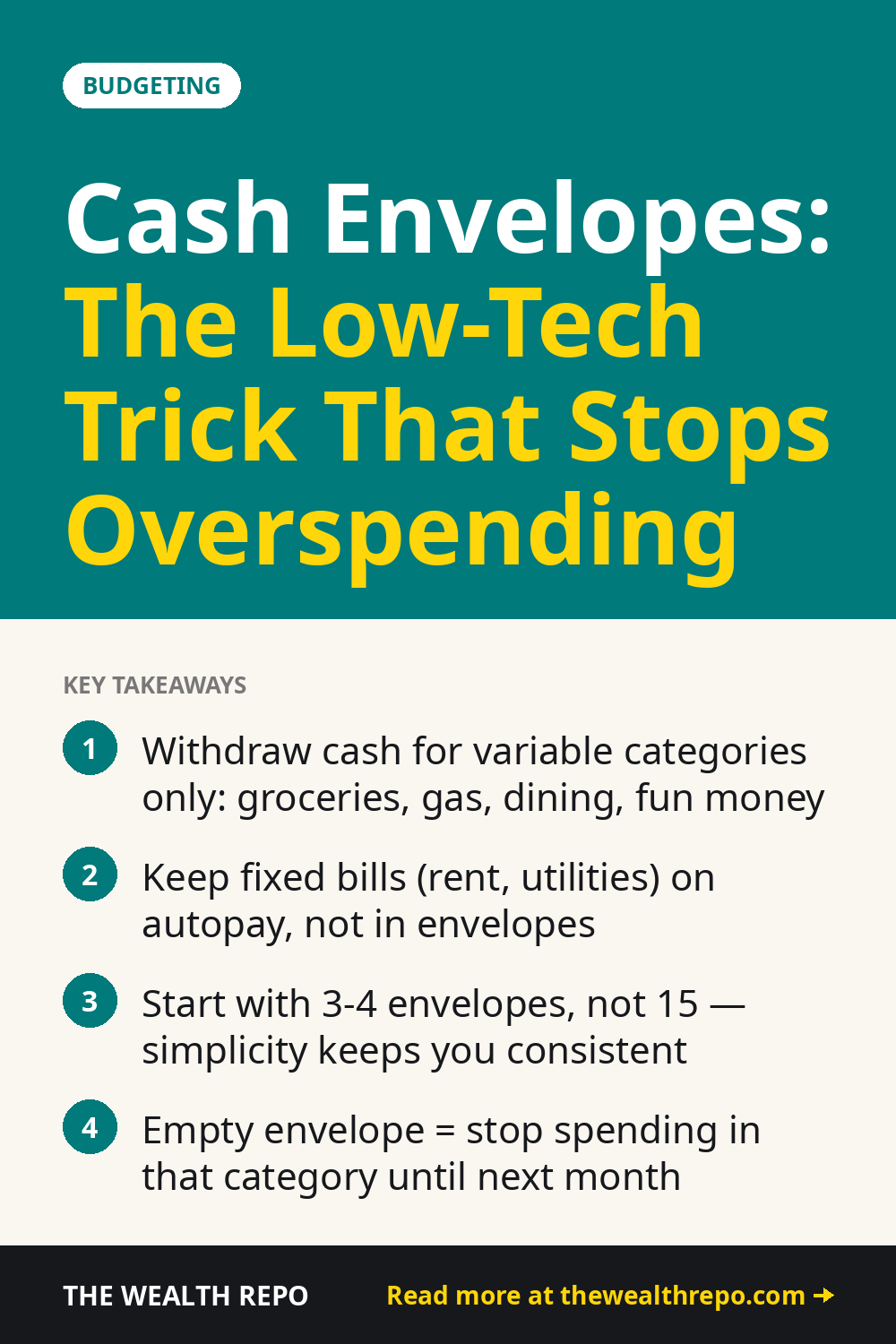
- ✅ Withdraw cash for variable categories only: groceries, gas, dining, fun money
- ✅ Keep fixed bills (rent, utilities) on autopay, not in envelopes
- ✅ Start with 3-4 envelopes, not 15 — simplicity keeps you consistent
- ✅ Empty envelope = stop spending in that category until next month
- ✅ Digital versions (Goodbudget, Qube Money) work if cash feels impractical
- ✅ Paper cash beats cards for willpower: handing over bills stings more than a tap